

Living with Epilepsy
Life on the Edge of a Precipice

Limited Answers
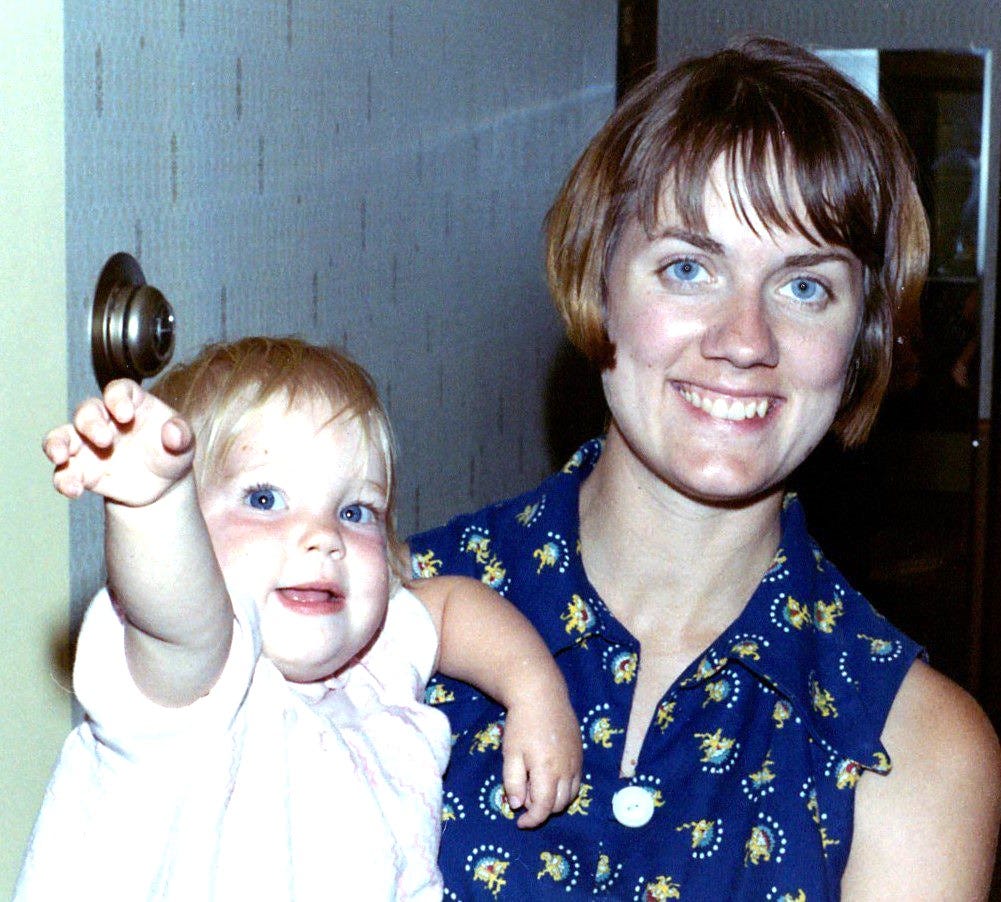
Fifty-seven years ago, when our first child, our daughter Kristy, experienced a febrile seizure at age nine months, it frightened and concerned me. Her doctors, however, assured my husband and me that we need not be worried. Kristy was perfectly healthy and febrile seizures in infants were not all that uncommon.
Back then in the mid-twentieth century, the doctors’ assertions were all we had to go on. We hoped they were right, especially because we knew that I had also experienced febrile seizures as an infant and now lived an almost ordinary life. I say almost ordinary because beyond infancy I suffered from epilepsy. Still, we trusted the medical community. They were the only source of information we had.
Even today with the vast resource of the internet at our fingertips, we would still have felt relatively comforted. According to the guidelines set by Children’s Hospital of Minnesota, infants who have simple febrile seizures have only an approximately 1-2% increased risk of developing epilepsy compared to 0.5% in children without febrile seizures.
Nothing Is Simple
A “simple” febrile seizure is a brief, generalized seizure lasting less than 15 minutes. Such an adjective to describe this event seems completely inadequate to any parent who has held a child, seizing for even one minute.
The factor that increased mine and my daughter’s chances of developing epilepsy is a family history of the disorder. Unfortunately, that family history had never been shared with me. I only have the vaguest memory of the seizures I had before high school because no one in my family spoke of them. My parents simply took care of me and never discussed with me what had happened. My grade schoolteachers cooperated with my parents in not discussing the one episode I had at school.
Not until I was fifteen did, I finally become aware that I suffered from epilepsy. That’s because I had a seizure while working on a float for my high school homecoming

parade. My best friends and I diligently poked crepe paper into the sides of a truck bed on a hot sticky night. Our adrenaline ran high and I doubt we stayed well hydrated. Suddenly I went into convulsions. My friends let me know later they thought I was dying. But, a teacher was monitoring the students and knew how to care for me. She had someone call for my parents. It has been the nature of all my seizures that I cannot recall the minutes before I seized or a long period after. My reality was that one minute I was working on the float with my friends and the next minute I awoke in my bed at home. My mother told me I had fainted at the gym. It wasn’t until I saw my friends two days later that I learned the truth. In retrospect I don’t remember confronting my parents about their obfuscation.
Rather I took my cue from them, and for most of my life until my daughter was born, I quietly wove having epilepsy into my life like a distant relation one doesn’t particularly like and hopes won’t come to visit, but if she does, you’ll deal with her at that time. Because my seizures were years apart for most of my life that didn’t interfere with my living a typical life. When they appeared, they upset things for a while but didn’t upturn my whole life.
Sometimes the incidents were even funny like the time I had a seizure in a diner. I had already ordered a meal to go. But when I regained consciousness, I not only didn’t remember ordering the meal to go, I had no clear idea why I was there. I simply ordered some soup and a coffee, finished these, and asked for the check. Then, the waitress asked would I like my to-go order now. For a moment, her question stunned and then reality flooded back. I asked what had happened. The people in the restaurant explained that I had a seizure and they’d waited for me to wake up to make sure I was okay. That was it. Relieved that they hadn’t called emergency personnel, I realized that my finance must be frantic wondering why I hadn’t come back with his lunch. Like I said, life just went on

A Higher Risk
That’s why Kristy’s first and even her second seizure didn’t send us into a tailspin. When they became more frequent, however, we began to seek more answers. Again, we were told to not be overly concerned. Children with multiple recurrent febrile seizures have a 15-16% higher risk of developing epilepsy.
Even so, with proper treatment 70% of people with epilepsy can live without seizures. I needed only a minimum amount of seizure control medications and none of these until I was an adult. Even the thought that my daughter may have inherited a mild form of epilepsy from me tore at my heart. Sadly, that would not be the whole story. Kristy’s story and that of her brother Johnny fills my memoir, Rosa Mystica: A Mother’s Mystery, due out on November 17, 2026.
Secrets Can Be Dangerous
My own struggle to live an ordinary life with epilepsy is a daily challenge. What I have determined ever since Kristy’s first seizure is to be open and frank about my epilepsy with anyone with whom I interact so they may be prepared to deal with an unexpected seizure—mine or someone else’s.
I’ll never forget finding you in bed one afternoon sleepy and totally confused about the day. I called Dad and he immediately knew you’d had a seizure. It was the first time in my life I think you’d had one - or at least that I knew about. I think I waa in high school.